The Tomato Frog of Maroantsetra: Ecology, Adaptation, and Conservation in Madagascar's Wetlands
Location: Maroantsetra District, Madagascar
Date: 2026-03-31
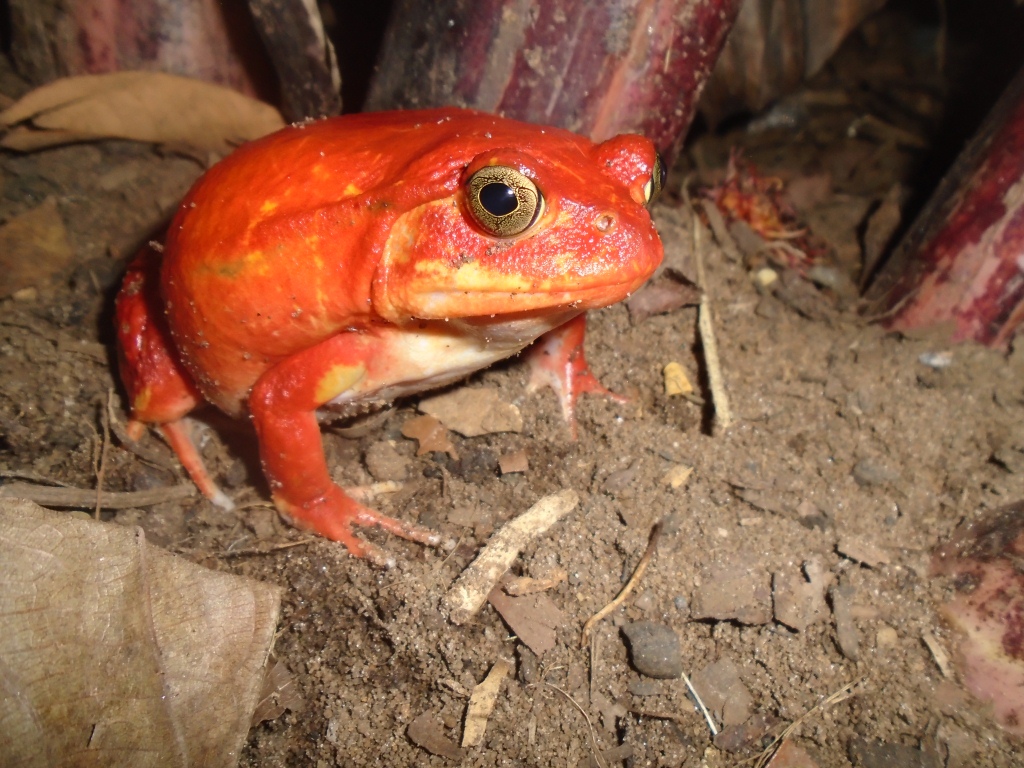
The Antongil Tomato Frog (Dyscophus antongilii) is a striking, endemic amphibian native to the humid lowland rainforests and wetlands surrounding Maroantsetra in northeastern Madagascar. Known for its vivid red-to-orange skin—especially prominent in females—the terrestrial species uses its coloration as an aposematic warning. When threatened, it inflates its body and secretes an irritating, sticky white fluid to deter predators. Largely nocturnal, the frog shelters beneath leaf litter and logs by day and relies on temporary pools, marshes, and slow streams for breeding during the rainy season. Females lay thousands of eggs in these temporary aquatic sites, where fast-developing tadpoles feed on algae and detritus before dispersing into the surrounding forest. As both predators of invertebrates and prey for larger animals, tomato frogs play a vital role in local food webs and serve as key bioindicators of wetland health. Despite historical declines caused by heavy collection for the pet trade in the 1990s, international trade restrictions and captive breeding have relieved collection pressure. However, the species faces ongoing threats from habitat loss and fragmentation driven by agricultural expansion (tavy), logging, and wetland degradation. Currently classified as Near Threatened on the IUCN Red List, the tomato frog benefits from regional protected areas and local community pride, often serving as a charismatic flagship species for wetland conservation. Safeguarding its future requires sustained habitat protection, corridor preservation, population monitoring, and continued integration of scientific research with community-based conservation initiatives. https://amphibios.app/articles/tomato-frog-maroantsetra.